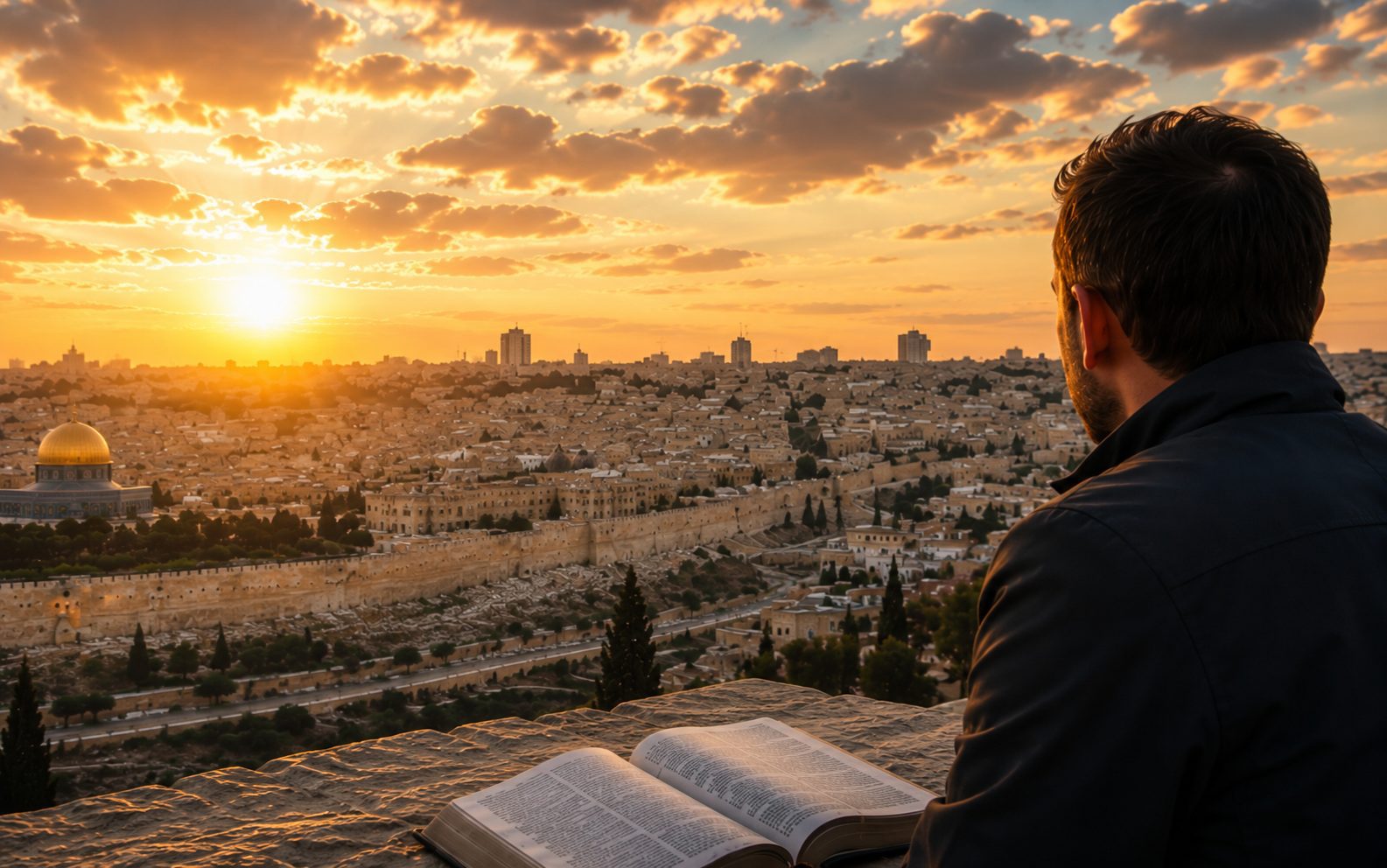
In a season when Jerusalem is again appearing in headlines because of war, missile threats, diplomatic strain, and public debate, many pastors are asking how the church should think and speak about the city. Some believers respond with strong certainty, treating every development as though its meaning were obvious. Others avoid the subject altogether, assuming it is too controversial or politically charged to handle with care. Zechariah helps the church take a better path by teaching us to think about Jerusalem with hope, seriousness, and humility.
Zechariah spoke into a time of restoration after exile, when the people of God were small, vulnerable, and uncertain about the future. Jerusalem was not a symbol of worldly strength. It was a city marked by weakness, fragility, and unfinished hopes. Yet into that setting, God spoke promises of His presence, His protection, and His future purposes. The Lord says, “I will return to Zion and dwell in Jerusalem. Then Jerusalem will be called the Faithful City” (Zechariah 8:3). That promise reminds us that Jerusalem matters first because of God’s relationship to it. Its theological significance begins with the presence and purposes of God.
This is one reason Zechariah is so helpful for the church. He does not present Jerusalem as though it were automatically righteous simply because it is Jerusalem. Nor does he treat it as an empty relic from Israel’s past. Instead, he presents the city within the framework of God’s covenant dealings, where judgment, mercy, restoration, and future hope all meet. Zechariah’s Jerusalem is tied to divine promise, but it also stands under the moral seriousness of God’s rule.
The prophet also widens the church’s vision by connecting Jerusalem to the nations. In one striking passage, Zechariah says, “Many peoples and powerful nations will come to Jerusalem to seek the Lord Almighty” (Zechariah 8:22). That matters because it keeps us from thinking about Jerusalem in narrow or tribal terms. In Zechariah, the city is not important merely for itself. It is bound up with the larger purpose of God to make His name known among the nations. Jerusalem stands within a redemptive horizon that reaches beyond one people to the wider world.
At the same time, Zechariah teaches restraint. His later visions are weighty, complex, and full of prophetic tension. They remind the church that Jerusalem cannot be reduced to simple slogans or instant certainty. Christians should be careful not to force every modern development into a rigid prophetic timetable. Zechariah calls us to reverence, not arrogance. He teaches us that God’s purposes are real, but also that they are often deeper and more layered than our quick conclusions.
Pastorally, this matters because Jerusalem can become either a subject believers neglect or a subject they approach with more certainty than Scripture itself gives. Zechariah guards us from both errors. He teaches us to care about Jerusalem because Scripture cares about it. He reminds us that the city belongs within the larger story of covenant faithfulness, messianic hope, and the gathering of the nations to the Lord. Christians should neither ignore Jerusalem nor speak about it carelessly. We should learn to think about it as the Bible does.
What should pastors do? Teach Zechariah so your people can see Jerusalem through the lens of God’s promises rather than through panic, pressure, or political noise. Help them understand that Jerusalem matters because God has woven it into His redemptive story. And remind the church that whenever Scripture speaks with prophetic depth, our first calling is not speculation, but humility before the Lord who rules history.
Pastoral Takeaway
• Teach Zechariah as a prophetic guide for thinking about Jerusalem with hope, humility, and theological depth.
• Help your church see that Jerusalem’s significance is tied to God’s presence, covenant purposes, and redemptive plan for the nations.
• Remind believers to approach prophetic texts with humility, discernment, and reverence for God’s Word.