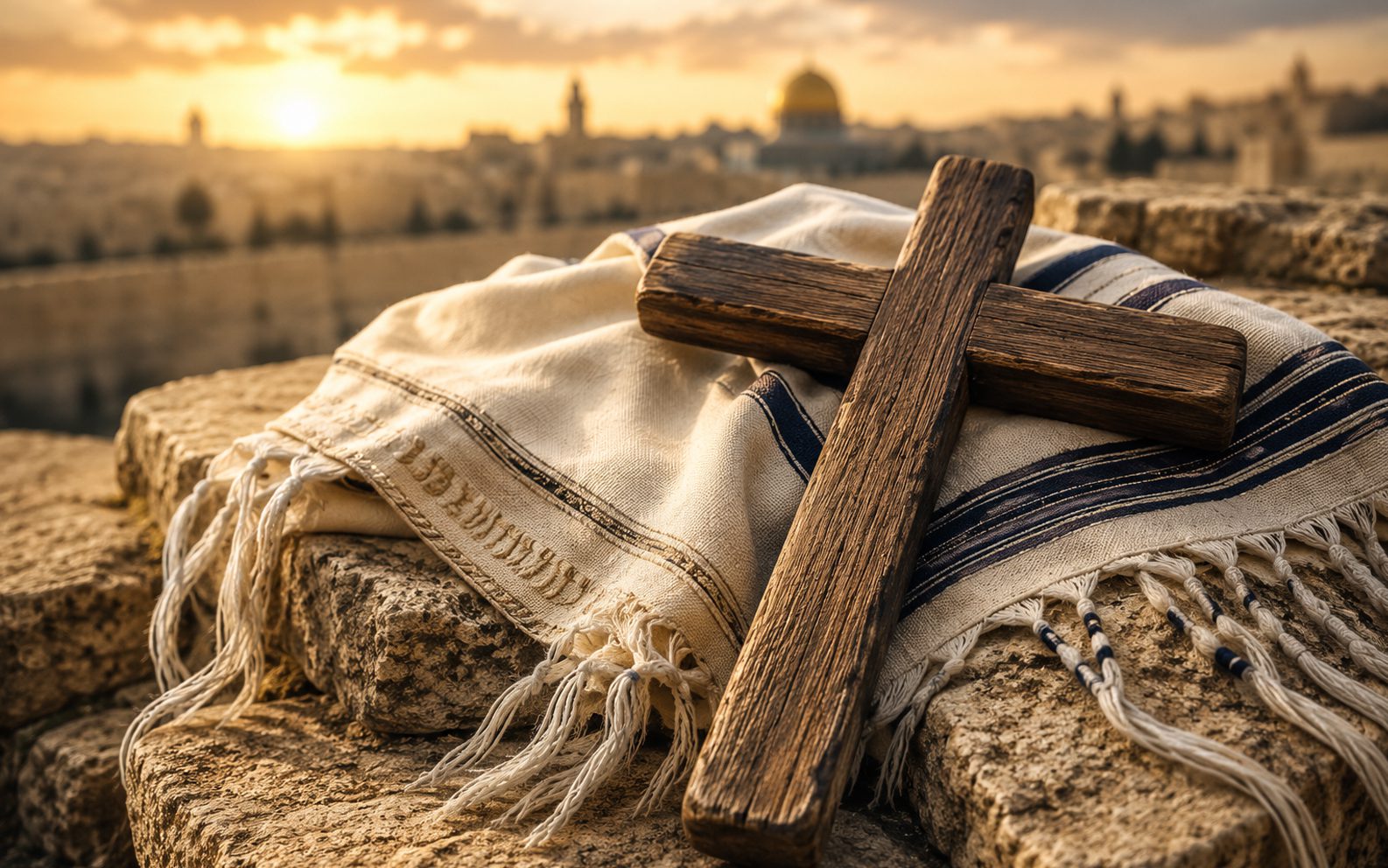
Christianity did not begin in Rome. It began in Jerusalem, among a Jewish people, with a Jewish Messiah, Jewish apostles, Jewish Scriptures, and a church that understood itself within the continuing story of Israel. Jesus was not separated from the covenantal world of Abraham, Moses, David, and the prophets. His first followers worshiped in the temple, observed Jewish rhythms of prayer, and proclaimed that Israel’s promised Messiah had come. The earliest church did not imagine that it had founded a religion detached from Judaism. It believed that the God of Israel had acted decisively through Jesus for Israel and, through Israel’s Messiah, for the nations.
That makes the church’s later detachment from its Jewish roots one of the most important historical developments pastors should consider. The separation did not happen in one moment, nor can it be blamed on one person. As the gospel moved into the Gentile world, the number of non-Jewish believers grew rapidly. The destruction of Jerusalem and the temple in AD 70 weakened the city that had served as the church’s original center. The Bar Kokhba revolt of AD 132–135 deepened the divide between Jewish communities and followers of Jesus. Over time, a movement born within Jewish life became increasingly Gentile in its language, culture, leadership, and self-understanding.
The problem was not that Gentiles entered the church. Their inclusion was part of the promise given to Abraham, through whom all nations would be blessed. The tragedy was that many Gentile Christians gradually forgot that they had been welcomed into a story they did not create. Paul had warned them not to become arrogant toward the natural branches, reminding them, “You do not support the root, but the root supports you” (Romans 11:18, NIV). Yet as the church became more culturally powerful, that warning was often neglected.
By the second century, influential Christian voices increasingly spoke as though Israel’s identity and promises had been transferred to the church. Justin Martyr described Christians as the “true Israel.” Later, Origen spiritualized many biblical promises concerning Jerusalem and the land, making their continuing meaning for the Jewish people increasingly difficult to see. By the fourth century, when Christianity gained acceptance and eventually imperial favor within the Roman world, the church had acquired cultural power while becoming more distant from the Jewish people who had given it the Scriptures, the apostles, and the Messiah.
Pastors should ponder what was gained and what was lost during that transition. The church gained influence, institutions, and a place within the empire. Yet it also became capable of reading Israel’s Scriptures while forgetting Israel, preaching Jesus while detaching Him from His Jewish identity, and celebrating grace while boasting over the very branches into which Gentile believers had been grafted.
Recovering the Jewish roots of Christianity does not mean placing Gentile believers under obligations never required of the nations. It means learning to read the Bible as one connected story and remembering that the gospel did not travel from Jerusalem to Rome in order to leave Jerusalem behind. The church honors Jesus more fully when it remembers that He remains the Jewish Messiah, that the apostles were sons of Israel, and that Gentile believers stand by grace within a story that began before them.
Perhaps the question every pastor should ask is not merely how Christianity reached Rome, but whether, in reaching Rome, the church forgot the root that had carried it there.
Sources
Gerald R. McDermott, ed. Understanding the Jewish Roots of Christianity: Biblical, Theological, and Historical Essays on the Relationship Between Christianity and Judaism.
Gerald R. McDermott, ed. The New Christian Zionism: Fresh Perspectives on Israel and the Land.
Oskar Skarsaune. In the Shadow of the Temple: Jewish Influences on Early Christianity.
Daniel Boyarin. Border Lines: The Partition of Judaeo-Christianity.
Justin Martyr. Dialogue with Trypho.
Christopher Kuehl. Is God a Zionist: Finding God’s Story in a World Obsessed with Israel.